
Smart Patient Monitoring.
AI-powered sensor system for geriatric care
About the project
Falls, incontinence and temperature anomalies are among the main risks for elderly residents in nursing homes — and they often go undetected, especially at night. This Final Degree Project proposes a practical, affordable and non-intrusive monitoring system that can be deployed in any geriatric center regardless of its resources.
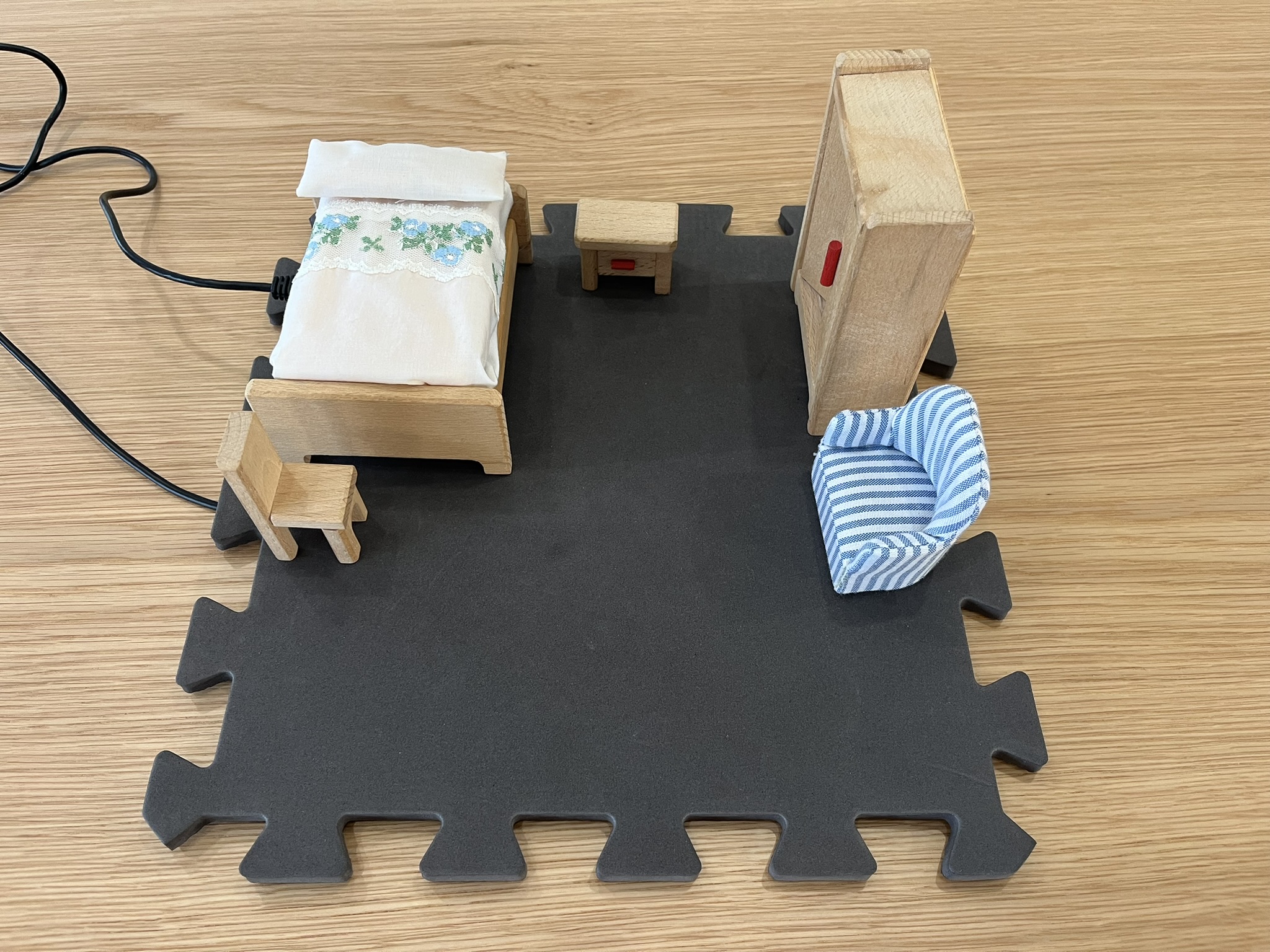
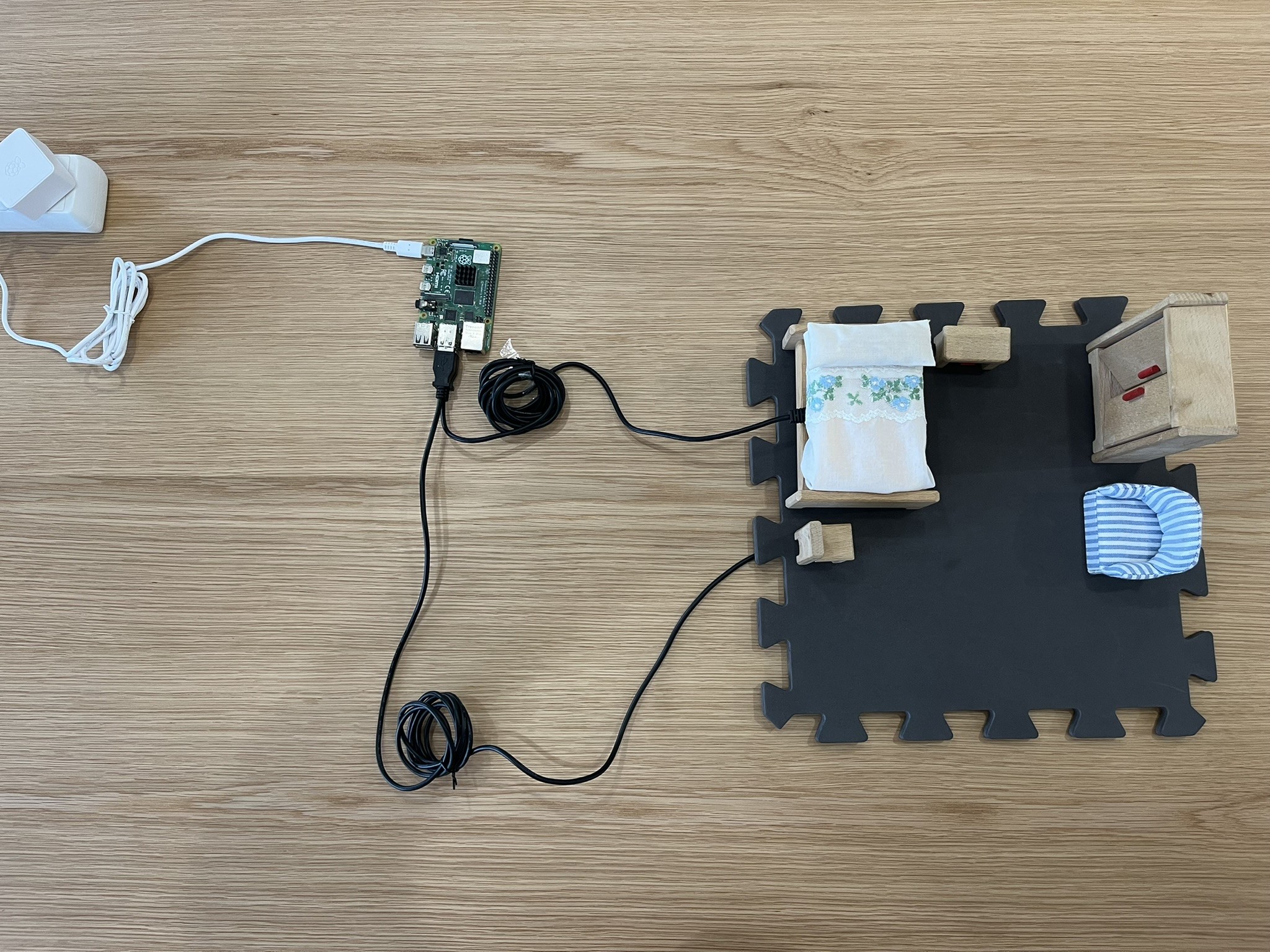
The system consists of Arduino Nano 33 BLE Sense units placed on the bed and floor of each room. These capture temperature, humidity and motion data, and run a TinyML fall-detection model locally on the microcontroller. A Raspberry Pi 4 acts as a communication hub, forwarding sensor data via MQTT to a real-time dashboard built with PyQt5 for healthcare staff.
The fall-detection model, trained and deployed with Edge Impulse, achieved a 99.1% F1-score on the test set. The system was validated on a physical mock-up of a geriatric room, confirming reliable detection of falls, humidity anomalies and temperature changes with no perceptible response delay. The project was awarded with Honors.
99.1%
fall detection F1-score
Honors
awarded by the jury
Features
Fall detection
A TinyML model trained with Edge Impulse uses k-means anomaly detection on accelerometer data to identify falls in real time, directly on the microcontroller.
Temperature & humidity
The HTS221 sensor continuously monitors bed temperature and humidity, detecting fever, hypothermia or incontinence episodes.
Real-time alerts
The PyQt5 dashboard instantly highlights affected rooms with visual and audio alerts, allowing staff to respond without delay.
Non-intrusive design
Sensors are placed on the bed and floor, with no cameras or wearables. Patients are monitored discreetly, preserving their privacy.
Scalable architecture
Adding a new room only requires configuring a new MQTT topic and a new sensor unit. The system adapts to any facility size.
Low-cost hardware
Built on Arduino and Raspberry Pi, the system is affordable and easy to install in any nursing home, regardless of budget.
Built with
The system combines embedded hardware and software. Arduino Nano 33 BLE Sense units run TinyML inference locally using TensorFlow Lite, and communicate over serial with a Raspberry Pi 4. The Pi forwards data to a Mosquitto MQTT broker on a central computer, where a PyQt5 desktop application provides the real-time monitoring interface for healthcare staff.
Hardware
Software
Awarded with Honors (Matrícula d'Honor) — Escola Politècnica Superior d'Alcoi, Universitat Politècnica de València.